Ha Chong-Hyun: Retrospective at the Asian Art Museum, San Francisco
For half a century Ha Chong-Hyun has painted from behind, pressing oil through the back of coarse burlap until it breaks out the front.

Ha Chong-Hyun, Painting From the Back
Ha Chong-Hyun: Retrospective, Asian Art Museum, San Francisco, through January 25, 2027
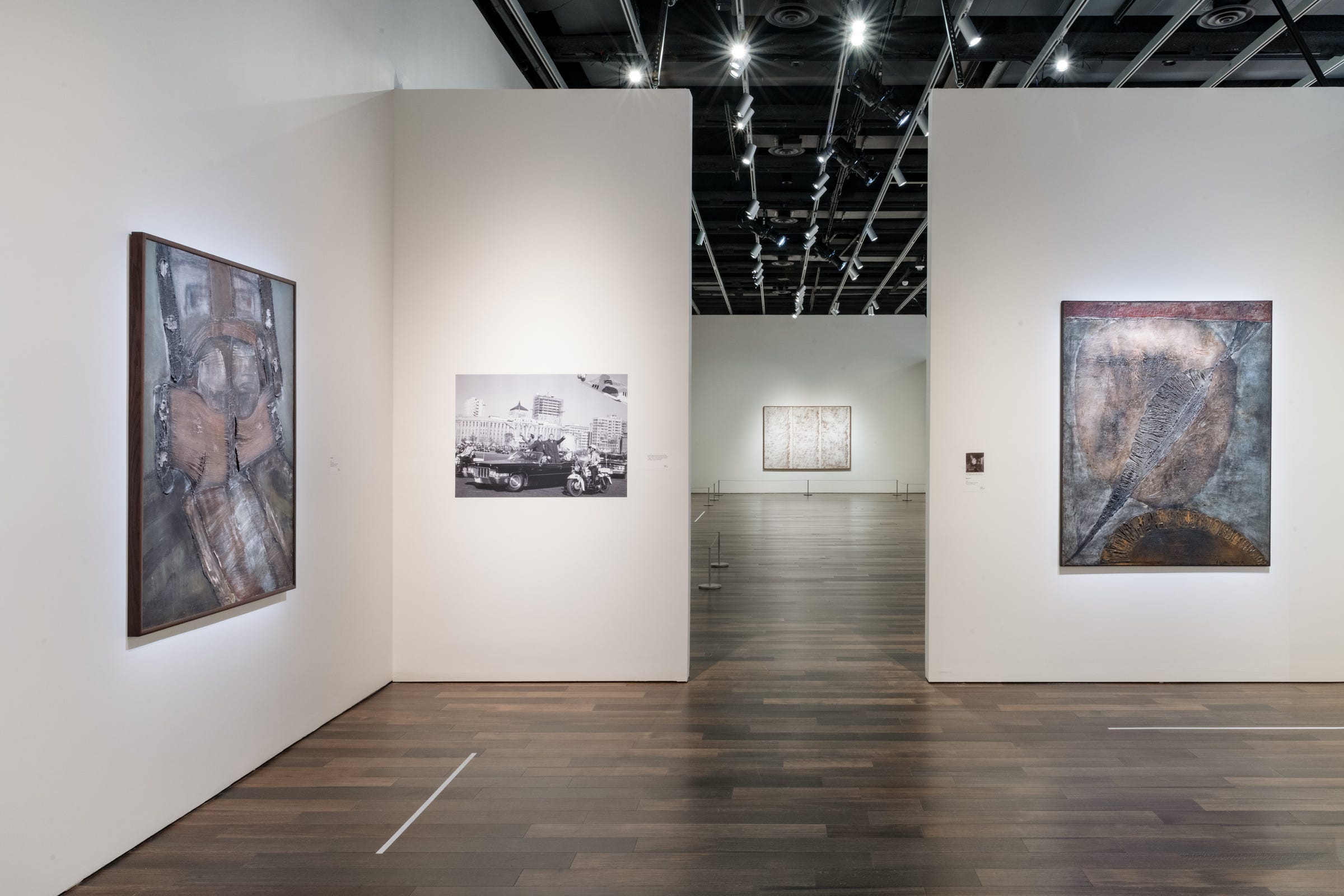
Ha Chong-Hyun does not paint the front of his canvases. Since 1974 he has loaded thick oil paint onto the reverse of coarse burlap and pressed it until it breaks through the weave to the other side, a method known in Korean as bae-ap-bub, or back-pressure. What the viewer sees is the paint that made it through the gaps in the cloth, carrying the trace of every push.
The material came before the method. Ha came of age in the aftermath of the Korean War, and he turned to industrial burlap sacks that had been used to ship rice into South Korea after the war, making them his canvas. The series that grew out of the technique, Conjunction, has now run for more than five decades. The museum describes canvases up to eight feet tall, worked with pressure and gravity and with tools that range from torches to ordinary kitchen utensils.
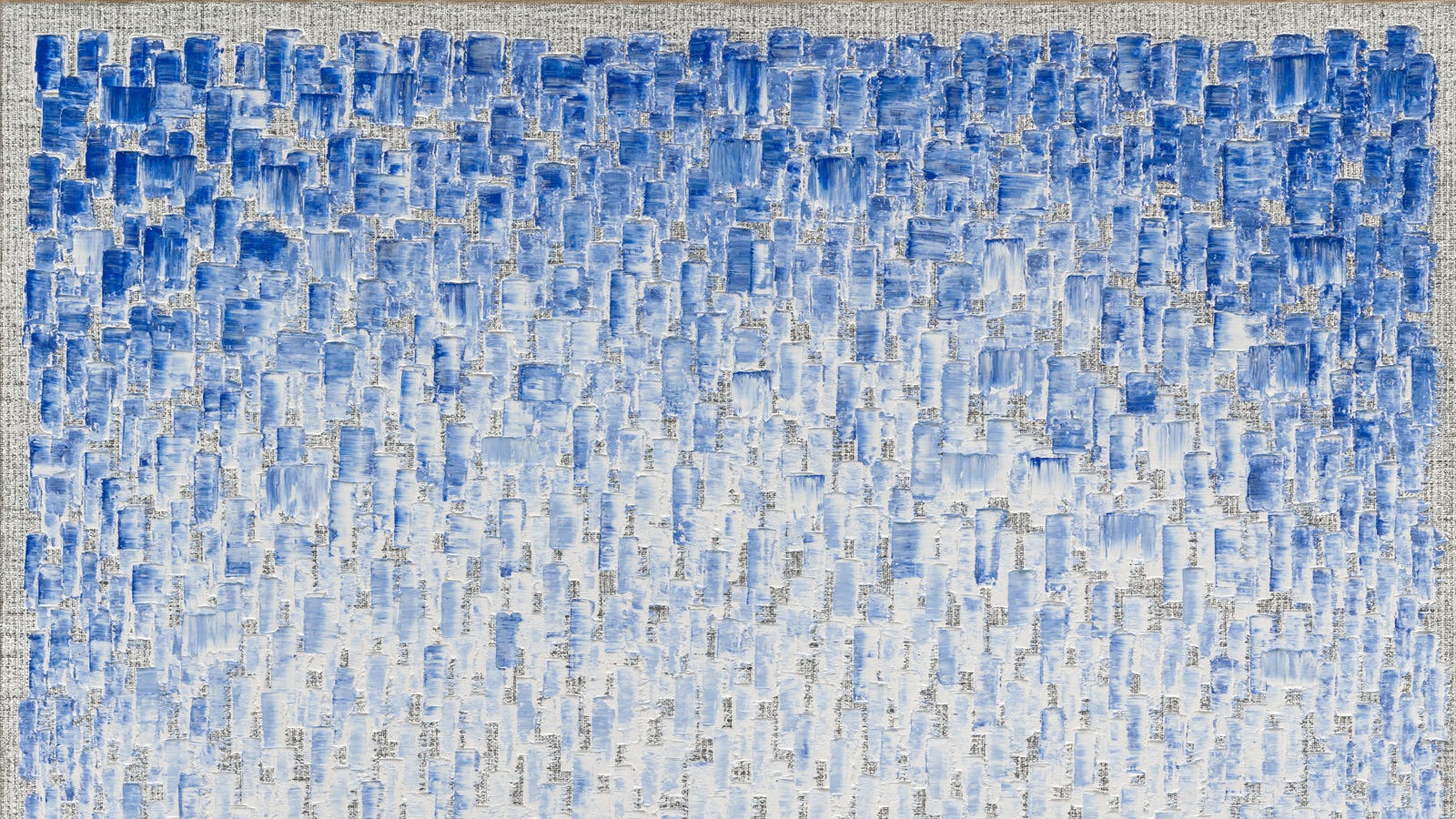
This is his first museum exhibition in North America: more than 50 paintings spanning over six decades, guest curated by Sunjung Kim, artistic director of Art Sonje Center in Seoul. It shows how much wider the work is than the label usually pinned to it. Ha is linked with Dansaekhwa, the Korean monochrome painting movement of the early 1970s, but in 1969 he was a founding member of the Korean Avant-Garde Association, and the show includes early 1960s paintings with passages scorched by flame and Counter-Phase, a 1971 work made from stacks of censored newspapers and blank pages.
Sunjung Kim frames these paintings less as images than as encounters, between the artist’s body and his material, between pressure and release. Look for the White Paper on Urban Planning works, with their grids and radiating lines, and then for the shift in the later canvases, where surfaces become modular and spatial and, from the 2010s, vivid primary colors arrive. In the most recent paintings, charred materials and ash merge with the paint. Two new works from 2025 bring the survey up to the present.
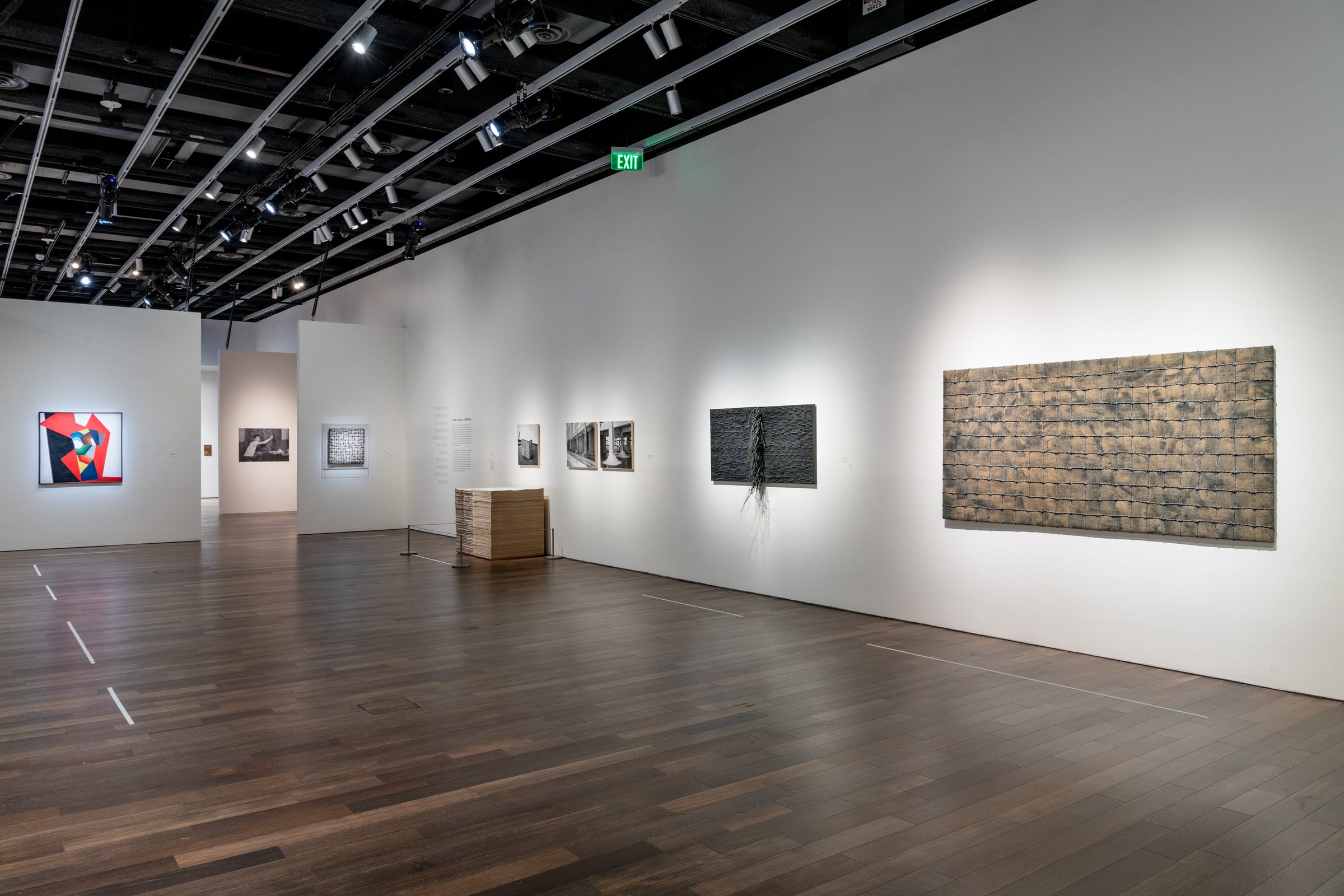
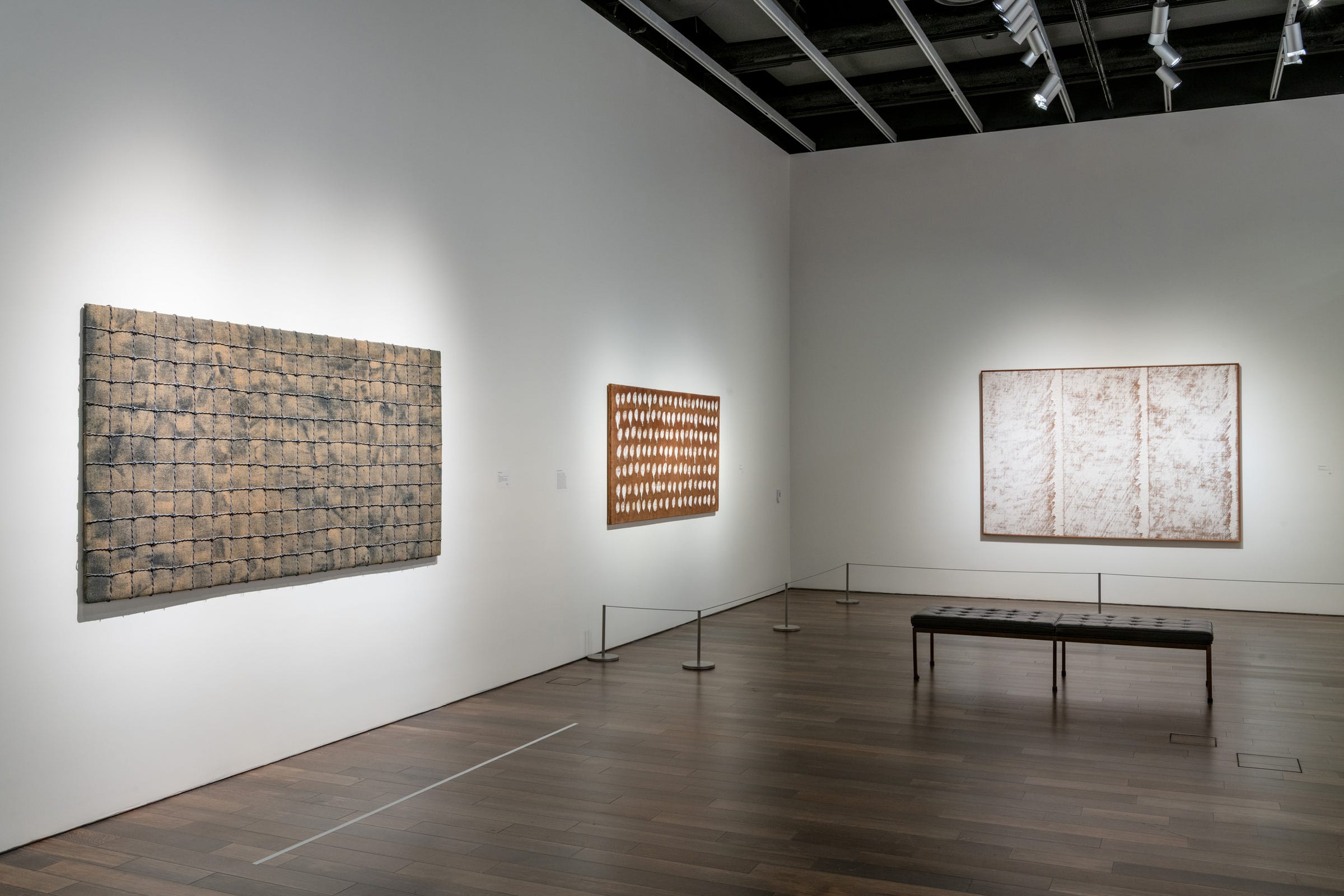
Ha was born in Sancheong, Korea, in 1935 and has lived and worked in Seoul since graduating from Hongik University in 1959. He later served as dean of Hongik’s College of Fine Arts from 1990 to 1994 and as director of the Seoul Museum of Art from 2003 to 2006. He showed at the 45th Venice Biennale in 1993, and in 2022 a solo exhibition at Palazzetto Tito was a collateral event of the 59th Biennale. His work is in the collections of the Guggenheim, the Art Institute of Chicago, M+, Leeum and the National Museum of Modern and Contemporary Art, Seoul. He is represented by Tina Kim Gallery in New York and Kukje Gallery in Seoul.
On view
Ha Chong-Hyun: Retrospective
Asian Art Museum, Akiko Yamazaki and Jerry Yang Pavilion, 200 Larkin Street, San Francisco, CA 94102
September 25, 2026 to January 25, 2027
Thursday, 1 pm to 8 pm. Friday to Monday, 10 am to 5 pm. Closed Tuesday and Wednesday.
Sources: Asian Art Museum, Ha Chong-Hyun: Retrospective · Asian Art Museum, press release · Tina Kim Gallery, artist page · Kukje Gallery, artist page
No feature on Artébay is paid for. If you spot an error, tell us in the comments or reply to this email, and we will correct it here with a dated note.
Discussion about this post